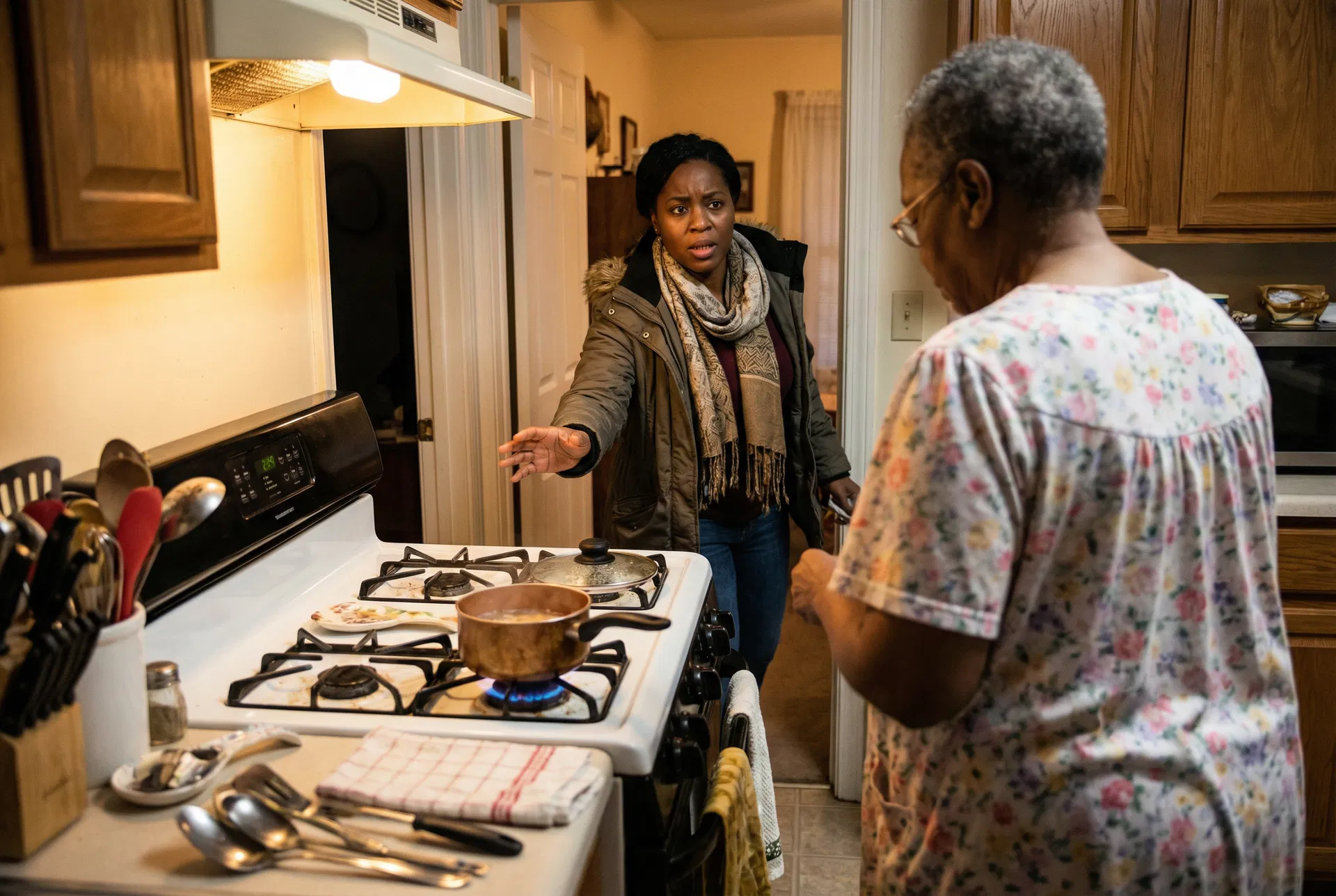
Dementia wandering affects approximately 6 in 10 people with dementia at some point during the disease. It is one of the most dangerous behaviors associated with cognitive decline — and one of the most common reasons families make the transition from home care to memory care. Understanding how to prevent wandering in dementia, and what to do when it happens, is not optional. It is a safety imperative.
This guide covers the causes of wandering, the most effective prevention strategies, what to do if your loved one wanders, and when the level of risk requires a higher level of care. If you are already seeing signs dementia is getting worse — including wandering, leaving the stove on, or disorientation at home — this article will help you understand what those behaviors mean and what to do next.
Quick Answer
Dementia wandering is a neurological symptom in which a person with cognitive decline leaves a safe environment without awareness of the risk. To prevent wandering in dementia: install door alarms and locks above eye level, establish a consistent daily routine, use GPS tracking devices, and register with the Alzheimer's Association Safe Return program. If your loved one has wandered once, they will likely wander again. Act immediately — delays increase risk significantly.
Planning earlier often creates better options later — and less pressure when the time comes.
Wandering is one of the most frightening aspects of dementia for families.
The fear of a parent leaving the house at night — or getting lost — is something many caregivers live with constantly. It's also one of the most common reasons families begin seriously considering memory care. If you're at this point, you're not overreacting.
Key Takeaways
- 6 in 10 people with dementia will wander at some point — it is not a rare event
- A consistent daily routine for dementia patients is one of the most effective prevention tools
- Door alarms, GPS trackers, and Safe Return registration are non-negotiable safety measures
- If your loved one has wandered once, treat it as a serious escalation — not a one-time incident
- At this stage, home care may no longer be sufficient to ensure safety
Why People With Dementia Wander
Many spouses wait until exhaustion forces the conversation. The loyalty that makes them wait is real — but so is the cost.
Wandering is one of the most dangerous behaviors in dementia — and one of the most common reasons families can no longer safely care for a parent at home. Understanding why it happens, how to reduce the risk, and what to do when it occurs is essential for anyone caring for someone with dementia.
Common triggers include boredom or restlessness, discomfort (pain, hunger, needing the bathroom), overstimulation, sundowning (increased confusion in the late afternoon and evening), and disrupted routine. Understanding these triggers is the first step toward prevention. This is also why establishing a daily routine for dementia patients is one of the most evidence-supported interventions available to family caregivers.
See What Care Paths Families Often Explore
Every family's situation is different — care needs, timing, and budget all vary. Tell us what you're dealing with and we'll help you think through your next step.
Get Help Understanding Your OptionsNo pressure. No obligation. Just information.
How to Prevent Wandering: Safety Measures That Work
Prevention requires layered strategies — no single measure is sufficient on its own. The goal is to create an environment where wandering is physically difficult, quickly detected, and safely resolved.
Secure all exits
Install door alarms on all exterior doors. Place locks at the top of doors, above the person's eye level — this simple change is highly effective because people with dementia typically look for locks at the standard height. Consider door handle covers that require two simultaneous actions to open.
GPS tracking device
Wearable GPS trackers (watch-style or clip-on) allow you to locate your loved one within minutes if they leave the property. Several are specifically designed for people with dementia and include geofencing alerts that notify you the moment they leave a defined safe zone.
Safe Return registration
Register with the Alzheimer's Association Safe Return program (1-800-272-3900). This national program provides ID bracelets and a 24-hour emergency response line. Law enforcement and emergency responders are trained to check for these bracelets.
Structured daily routine
Boredom and restlessness are major wandering triggers. A predictable daily schedule with regular meals, activities, outdoor time, and rest periods significantly reduces the urge to wander. Consistent routine also reduces sundowning-related agitation.
Visual cues and camouflage
Place a large STOP sign or a realistic mural of a bookshelf over exit doors. People with dementia often respond to visual cues even when verbal instruction fails. Cover door handles with cloth covers that blend with the wall.
Motion-activated alerts
Install motion sensors near exits that send alerts to your phone. These are especially important at night, when wandering risk increases significantly due to disorientation in the dark.
What to Do If Your Loved One Wanders
Act immediately — delays increase risk significantly.
- 1Call 911 immediately: Do not wait. People with dementia can cover significant distances quickly and cannot reliably find their way back. Tell the dispatcher your loved one has dementia and provide a recent photo description.
- 2Contact neighbors and nearby businesses: While waiting for emergency services, alert immediate neighbors and any nearby shops or businesses. People with dementia often enter the nearest open door.
- 3Check familiar places first: Former workplaces, childhood homes, or places of worship are common destinations. Dementia causes people to seek places that feel familiar from long-term memory.
- 4Use GPS tracker data immediately: If your loved one is wearing a GPS device, open the tracking app immediately and share the location with emergency services.
- 5File a missing person report: Do not wait 24 hours. Police departments treat missing persons with dementia as an immediate emergency. Request a Silver Alert if available in your area.
When You Need More Support
In most cases, families can manage early-stage wandering risk with the prevention strategies above. But there is a point where home care is no longer sufficient to ensure safety — and recognizing that point is critical.
At this stage, home care may no longer be sufficient when: your loved one has wandered more than once; they have been found outside at night; they have left the property and been unable to identify where they live; or when the level of supervision required to prevent wandering exceeds what one caregiver can provide.
This is also the point where families need to seriously evaluate when it's time to move to memory care. Memory care communities are specifically designed to prevent wandering — with secured perimeters, 24-hour supervision, and structured programming that addresses the restlessness and disorientation that drives wandering behavior. Understanding the cost of assisted living and memory care compared to the cost and risk of continued home care is an essential part of this decision.
The Connection Between Wandering and Other Behavioral Symptoms
Wandering rarely occurs in isolation. It is typically part of a broader pattern of behavioral symptoms that signal significant disease progression. Families managing wandering are often simultaneously dealing with dementia aggression and paranoia, sundowning, and refusal of care. If the wandering is concentrated at night — disrupting the caregiver's sleep and creating overnight safety risks — see our dedicated article on what to do when an older adult wanders at night.
When multiple behavioral symptoms are present simultaneously, the care needs have almost certainly exceeded what home care can safely provide. This is not a failure — it is a medical reality. The question is not whether to seek more support, but how to do it in a way that preserves your loved one's dignity and your family's wellbeing. If you are also experiencing signs of caregiver burnout, that is an additional signal that the current care arrangement is no longer sustainable.
How common is wandering in dementia?
Approximately 6 in 10 people with dementia will wander at some point. It is most common in the middle stages of Alzheimer's disease and other dementias, but can occur at any stage.
What time of day is wandering most common?
Wandering is most common in the late afternoon and evening (sundowning), and at night. These are the highest-risk periods and require the most vigilant monitoring.
Can medication stop wandering?
There is no medication specifically approved to stop wandering. Some medications can reduce agitation and restlessness, which may indirectly reduce wandering. Discuss options with a geriatric psychiatrist or neurologist.
When should I consider memory care for wandering?
When your loved one has wandered more than once, has been found outside at night, or when the supervision required exceeds what you can safely provide at home, memory care should be seriously evaluated. Memory care communities are specifically designed to prevent wandering safely.
What to Do Next
- 1Install door alarms and above-eye-level locks on all exterior doors today
- 2Register with the Alzheimer's Association Safe Return program (1-800-272-3900)
- 3Order a GPS wearable device — do not wait for a second wandering incident
- 4Establish or reinforce a consistent daily routine to reduce restlessness
- 5Evaluate whether the current care setting can safely manage wandering long-term
Get Help Understanding Your Options
If wandering has become a safety concern, we can help you understand memory care options and identify communities with the right security, staffing, and programming for your loved one's specific needs.
Get Help Understanding Your OptionsConcerned your loved one may no longer be safe at home?
Complete our free Dementia Care Assessment and receive personalized guidance for your family's situation.
What Should I Do Next?
When Should Someone With Dementia Move to Memory Care?
10 indicators and how to have the conversation
What Is Sundowning in Dementia?
Causes, triggers, management strategies, and when to seek memory care
The Complete Dementia Care Guide
Stages, daily care strategies, and family planning
Assisted Living vs. Memory Care
When standard assisted living is no longer sufficient
Care Transitions Resource Center
Every resource organized by care stage
Related Articles
Other guides families have found useful:
- How to Pay for Assisted Living When You Think You Can't Afford It
- Hidden Costs of Assisted Living (What Facilities Don't Tell You)
- 7 Signs It's Time for Assisted Living (Most Families Wait Too Long)
- How to Choose the Right Assisted Living Facility (Before It's Too Late)
- Assisted Living vs Memory Care: What Most Families Get Wrong
If you want help making the right care decision for your parent, you can start with a quick care assessment.
Start a Free Care AssessmentEven early research can help reduce stress later. There is no pressure or obligation.